More Than Words: How Karin Hiranuma Helps Learners Truly Communicate in Japanese

There is a difference between knowing something and understanding it in a way that changes how you act. Anyone can look up a grammar rule or memorize a list of keigo expressions. But knowing that a rule exists and knowing how to use it naturally in a real workplace conversation are two very different things. For Karin Hiranuma, a Japanese trainer at COMAS, the gap between those two things is exactly where her work begins.
“Knowledge is easy to gain, but also easy to forget,” she says. “What I try to provide is insight — something a learner discovers for themselves that stays with them long after the session is over.”
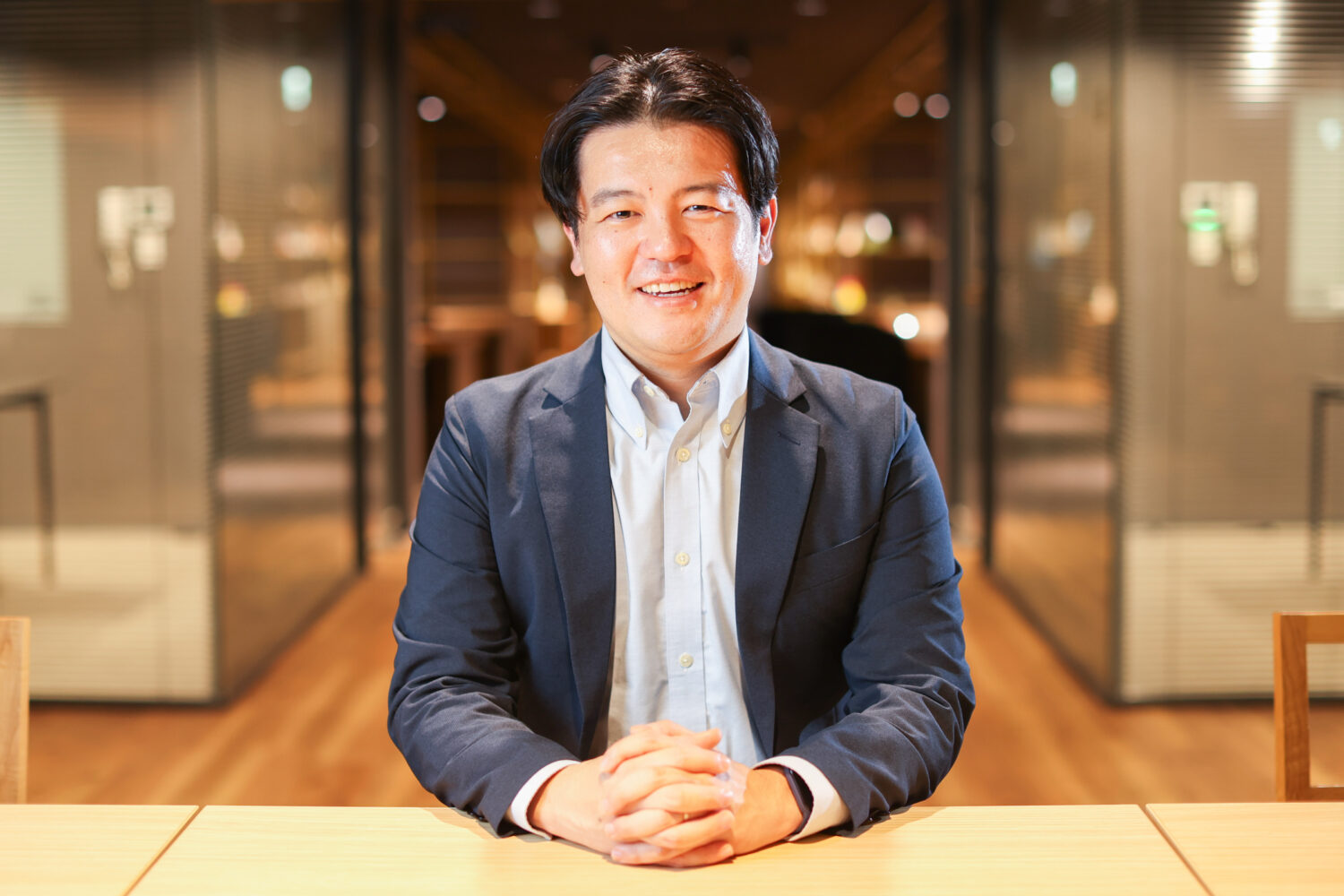
Meet the Trainer: Karin Hiranuma
Karin’s path to Japanese language training was shaped by a long-held dream: to build bridges between Japan and the wider world. From her university years, she knew she wanted a career that connected people across cultures and borders. After graduating, she spent her first year working in Indonesia, pursuing that vision directly.
When the pandemic brought her back to Japan, she found herself rethinking what that bridge-building work could look like. She wanted something that allowed her to contribute to individuals in a meaningful way, while staying connected internationally. Japanese language training emerged as a natural answer — and not just because of the obvious fit. A university internship in the Philippines, where she had taught Japanese to local children, had quietly planted a seed years earlier.
“Looking back, I think that experience is probably why teaching Japanese came to mind so naturally,” she says.
Since becoming a trainer, Karin has worked with a wide range of learners: professionals who need Japanese for work, enthusiasts drawn to Japanese culture, university applicants preparing to study in Japan, and learners working toward JLPT certification. Before joining COMAS, she had already built a practice around one-on-one online sessions, developing her own approach to personalized training along the way.
Discover how personalized Japanese training can support your team’s communication at work. Learn about our programs here.
Why COMAS? A Philosophy Already in Practice
When Karin encountered COMAS, she recognized something familiar.
“I was already doing one-on-one sessions online before joining, always trying to find the approach that worked best for each individual learner,” she says. “COMAS puts the learner first and builds every session around their specific needs. That resonated with me deeply — it was exactly the way I had already been working.”
What COMAS gave her wasn’t a new philosophy. It gave her a home for the one she already had.
A Style Named by a Learner
Ask Karin to describe her training style and she reaches for a phrase she didn’t come up with herself. A learner once told her that her approach was 寄り添い型 — a Japanese expression that means something close to “walking alongside.” It stuck.
“I always hold onto the trainer’s perspective,” she says, “but I never let go of the learner’s perspective either. I try to think about how they’re feeling, what they’re struggling with, and what kind of support or feedback will actually reach them.”
At the center of her approach is a deliberate choice to prioritize insight over knowledge. Vocabulary lists and grammar explanations have their place, but Karin believes the most valuable thing she can offer is something harder to find in a textbook.
“Knowledge is something you can get from books or the internet,” she says. “But insight — a real moment of self-discovery — is something you rarely arrive at alone. And once you have it, it stays with you.”
In practice, this means her feedback and her questions are designed not just to correct or explain, but to help learners notice something about themselves: how they communicate, where they get stuck, and what shifts when they approach things differently.
Getting to the Real Challenge
For learners who use Japanese professionally, Karin has found that the biggest obstacles are rarely what they expect.
“Many of the learners I work with at a business level already have solid grammar and vocabulary,” she says. “The real challenge is something different — it’s learning to communicate Japanese ideas in a Japanese way.”
To get there, Karin starts by learning as much as she can about each learner’s actual work. She researches their industry independently, but she also asks learners to explain their jobs to her in their own words — in Japanese, as if speaking to someone from a completely different field.
This isn’t just an exercise in vocabulary. It’s a way of practicing something learners need constantly at work: organizing thoughts clearly for an audience that doesn’t share their context.
“When you explain something complex to someone who genuinely doesn’t know your world, you have to think carefully about how to make it clear,” she says. “That process — organizing and expressing ideas for the listener — is exactly what professional Japanese communication requires.”
She also finds that learners respond visibly when she reacts with genuine curiosity and surprise to what they share. “I really do find it fascinating,” she says. “And when a learner sees that their Japanese explanation actually landed — that I understood something I didn’t understand before — their confidence in using the language grows in a way that’s hard to manufacture artificially.”
See how COMAS designs training around what your employees actually need to do at work. Explore our approach here.

The Layer Beneath Keigo
One of the most common pain points Karin hears from business Japanese learners is keigo — the formal register of Japanese that governs much of professional communication. It’s difficult even for native speakers, and for foreign professionals, it can feel like an entirely separate language.
But Karin believes the real challenge isn’t keigo itself. It’s the cultural logic underneath it.
“The difficulty isn’t that keigo exists,” she says. “It’s that keigo reflects a way of seeing the world that takes time to internalize — things like the distinction between uchi and soto.”
The concept of uchi (inside) and soto (outside) shapes much of Japanese professional communication in ways that aren’t always explicit. Consider the difference between how you speak about your own manager within your company versus how you refer to them when speaking with a client: inside, you use honorifics; outside, you drop them entirely. The rule exists, but understanding why it exists — and feeling it naturally rather than calculating it every time — is a different matter.
“If you approach it as a set of rules to memorize, it quickly becomes overwhelming,” Karin says. “What I try to do is help learners feel these concepts through real examples and conversation, so that they start to internalize the logic rather than just the rules.”
A Month That Changed Everything
One learner success story has stayed with Karin in particular. She began working with a learner who held an N3 qualification and had solid knowledge of grammar and vocabulary — but described herself as completely unable to speak.
The reason, it turned out, was perfectionism. She would begin to form a sentence, anticipate the possibility of making a mistake, and stop herself before saying anything at all.
“Just telling someone to be confident isn’t enough,” Karin says. “That kind of encouragement, without anything behind it, feels irresponsible to me as a trainer.”
Instead, Karin took a different approach. She began each speaking opportunity by first showing the learner how to say what she wanted to say — giving her a clear, correct model before asking her to practice. From there, she built up speaking practice within the session itself, training until the learner felt genuinely ready. She also suggested specific self-study methods designed to increase output gradually, in ways the learner could sustain on her own.
The learner followed through. Within one month, something had shifted — not just in her speaking ability, but in her face.
“The change in her expression over that month was striking,” Karin recalls. “She told me directly that she had started to enjoy using Japanese and speaking in Japanese. For me, contributing to that kind of mindset shift — not just skill development, but the way a learner sees themselves — was one of the most rewarding experiences I’ve had as a trainer.”
Learning from One Another
Because COMAS trainers work one-on-one with their learners, it can be easy for the work to feel solitary. The trainer community at COMAS is one of the ways that changes.
“In a one-on-one format, you don’t naturally see how other trainers work,” Karin says. “The opportunity to share challenges, exchange ideas, and learn from colleagues who bring completely different strengths and experiences is something I find genuinely valuable.”
Senior trainers organize regular meetings where trainers present and share knowledge, as well as informal spaces to talk through difficulties. For Karin, these moments of connection are a meaningful part of what makes COMAS different.
Looking Ahead
Karin’s goals as a trainer center on one core commitment: helping every learner make the most of their potential. To do that, she knows she needs to keep growing herself.
“I want to deepen my experience across different learners and contexts, and to contribute to the COMAS trainer community in a way that helps all of us improve,” she says. “We have such a wonderful group of trainers here. I’d love to find ways for all of us to share what we’re learning and grow together.”
A Message for Learners and Their Companies
For anyone considering a Japanese training program — whether as an individual or as a company — Karin’s advice is clear: don’t try to do it alone.
“Language learning is genuinely difficult, and everyone has different strengths and weaknesses,” she says. “Some people are strong at speaking but struggle with reading. Others can absorb input easily but find output difficult. A personalized approach, built around the individual, is really the best way to make progress.”
She also wants to reframe how people think about the process itself.
“Language isn’t just memorization. The goal is communication — and that takes training, not studying. It’s something you build a little at a time, consistently, over time.” Even five minutes of speaking practice a day, she says, can make a real difference. “Don’t think of it as studying. Think of it as building a habit. And then take that first step.”
At COMAS, Karin’s role is to make sure that first step leads somewhere — and that every step after it brings the learner closer to expressing themselves with confidence, in Japanese, in the workplace where it matters most.
Ready to support your team’s Japanese communication with training built around their real needs?
Learn more about our Corporate Japanese Training programs here.
Contact us to discuss your team’s needs.