Beyond the Screen: How Face-to-Face Events Strengthen Corporate Language Training
Most corporate language training happens entirely online. Learners log in for weekly sessions, trainers guide them through materials, progress gets tracked in dashboards. It’s efficient, scalable, and convenient. But something important can get lost in that efficiency: the human connection that transforms training from a task to complete into a relationship that drives real growth.
Recently, COMAS organized a face-to-face event at Macromill’s Tokyo office, where trainers and learners met in person after months of online collaboration. What happened during those two hours revealed why going beyond the screen matters for corporate language training programs.
目次
Why Face-to-Face Events Create Value Beyond Online Sessions
Online training works. Learners improve their language skills, complete their programs, and apply new abilities at work. But when asked what makes the difference between training that feels transactional and training that genuinely motivates, both trainers and learners point to the same factor: personal connection.
“Normally we only know names on a list,” explained trainer manager JP Corbeil. “Meeting someone face-to-face increases motivation to support them and deliver a better experience.”
This matters more than many companies realize. When trainers see learners as real people with specific contexts, challenges, and goals rather than names in a schedule, they invest more care into each session. When learners see trainers as genuine individuals who care about their growth rather than instructors delivering a service, they engage more deeply with the learning process.
One learner who attended the Macromill event captured this shift: “Meeting trainers in person made me feel that they truly care about our learning. It strengthened my desire to keep improving, even though English conversation is still difficult for me.”
Face-to-face events transform abstract commitments into tangible relationships. They create moments where both sides see each other as whole people, not just roles in a training program. That shift matters for program outcomes.
Creating Space for Authentic Connection
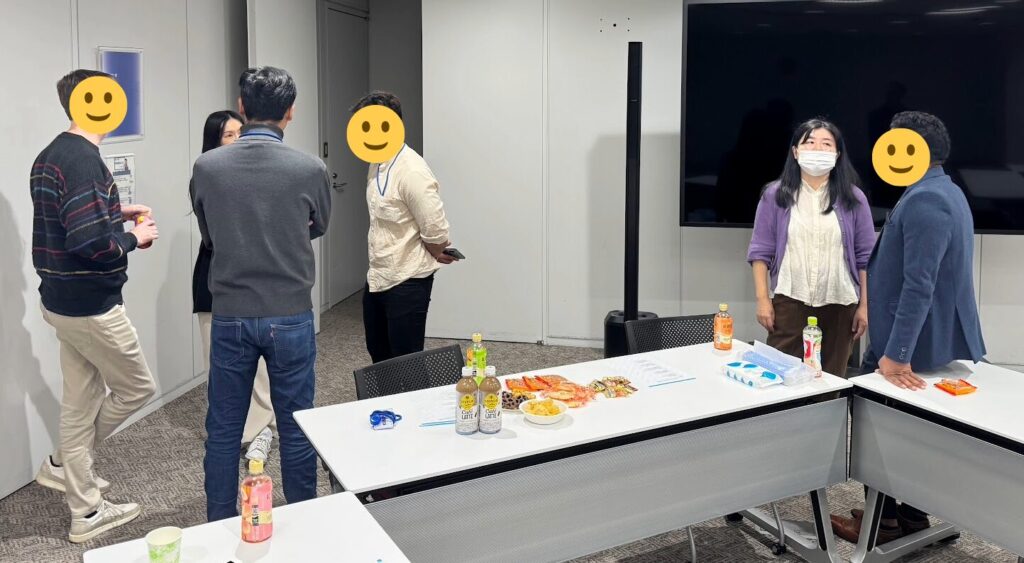
The Macromill event intentionally avoided rigid structure. No formal presentations, no scheduled activities, no assigned seating. Instead, trainers distributed themselves throughout the room, making it easy for anyone to join any conversation. Light food and drinks created a relaxed atmosphere where people could unwind after work rather than feeling like they were attending another corporate obligation.
“The atmosphere was very relaxed and approachable,” noted David Guerrero, who helped to organize the event. “Since it was held at the end of the day, many participants came ready to relax, talk, and enjoy themselves rather than feeling like they were at another formal work event.”
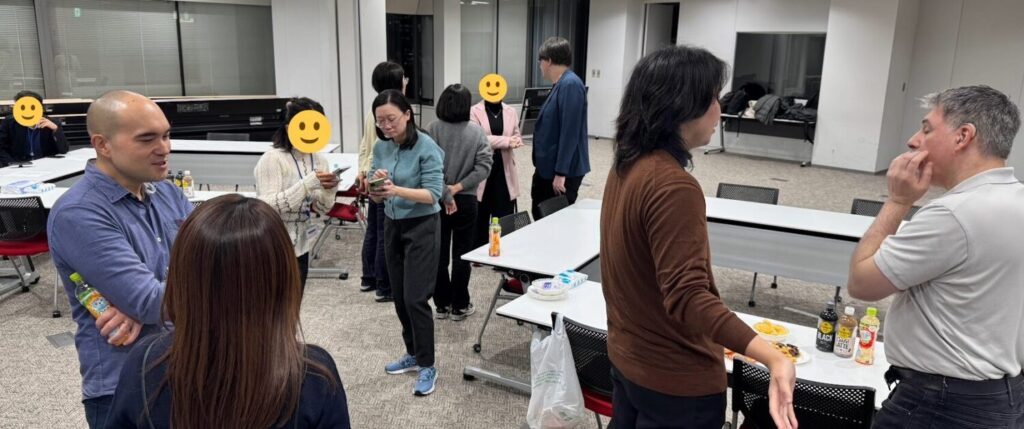
This informal setting enabled different types of valuable interactions. Some learners finally met trainers they’d been working with for three to six months, putting faces to voices and deepening existing relationships. Other learners connected with trainers they hadn’t worked with yet, experiencing different communication styles and personalities. Potential new learners who hadn’t started the program yet could talk directly with current participants about their experiences and with trainers about the approach.
JP Corbeil described observing a colleague working with a beginner-level learner: “I was impressed with how patient and genuinely curious the trainer was, even though the learner responded slowly. They exchanged a lot beyond English learning, like music, work, and hobbies. It felt like a real, natural conversation, and both sides seemed excited.”
Trainer Iris Cortés meeting her learner in person for the first time noted: “One moment that really stood out was when my learner shared more about her passion for motorcycles and showed me photos on her phone. Her English level is A2 and she is naturally quite shy, so I truly appreciated her openness and trust.”
These weren’t conversations optimized for language learning efficiency. They were genuine human exchanges where the language of study happened to be the medium. That distinction matters. It showed learners that their trainers cared about them as people, not just as learners to move through customized curriculum. It showed trainers the full context of who their learners are beyond the specific goals documented in session notes.
Impact Beyond the Event Itself
The value of face-to-face events extends well beyond the two hours people spend in the room together. The connections formed continue to influence how both trainers and learners approach their ongoing work together.
For trainers, meeting learners in person creates stronger motivation to deliver excellent experiences. Trainer manager JP Corbeil explained: “Meeting someone in person makes you want to put more care into their learning experience. Now that I’ve met certain learners, I feel more motivated to make sure their experience is great.”
This increased investment isn’t just emotional. It’s practical. Trainers who understand more about their learners as people can better tailor content, examples, and approaches to what will resonate. They can reference shared moments from the event to build rapport during online sessions. They have richer context for understanding when a learner is struggling and why.
For learners, the impact centers on trust and commitment. One learner shared: “There was no major change to my view of the sessions, but meeting my trainer in a different setting allowed us to discuss different topics, and I could see facial expressions and gestures more clearly. It created a more relaxed conversation.”
Another emphasized how the event strengthened their resolve: “I realized again how difficult English conversation is for me, but seeing how kindly the trainers support us made me want to continue improving step by step.”
The event also created value for potential new learners considering joining the program. Rather than relying on marketing materials or orientation presentations, they could experience firsthand what it feels like to interact with COMAS trainers. Event organizer David Guerrero noted: “Some potential learners even said things like, ‘I really hope I can join in the next sign-up period,’ after seeing how satisfied current learners were.”
For the broader program, these events demonstrate something important to both companies and learners: COMAS is willing to invest in relationships beyond the minimum required to deliver training. Making time for trainers to travel to company offices, organizing events, creating space for informal interaction rather than structured customized curriculum delivery—these choices signal that the program values people and relationships, not just completion rates and test scores.
What This Means for Corporate Training Programs
The success of the Macromill event points to a broader principle: effective corporate language training requires more than good customized curriculum and qualified trainers. It requires human connection that transforms contractual relationships into genuine partnerships.
This doesn’t mean every program needs monthly face-to-face events or that online training is insufficient. The Macromill participants had been making excellent progress through their regular online sessions. But adding occasional opportunities for in-person connection deepens the foundation that online work builds upon.
Trainer Iris Cortés summarized the impact well: “Face-to-face events are excellent for building rapport. They also create a unique learning opportunity outside the typical online environment. Absolutely, I would love to have more opportunities to meet learners in person.”
Companies investing in language training should consider whether their programs create space for these kinds of human connections. Not because face-to-face time directly improves test scores or speeds up progression through levels, but because it strengthens the relationships that motivate learners to keep showing up, keep practicing, and keep pushing through the inevitable plateaus that come with language learning.
At COMAS, we’re committed to going beyond fixed formats and formulaic approaches. We meet learners where they are, adapt as their needs evolve, and work closely with companies to create meaningful learning experiences that truly support people, not just programs. Events like the one at Macromill demonstrate what that commitment looks like in practice: real people connecting in real ways, building the trust and motivation that drive lasting improvement.
Take Your Team’s Communication to the Next Level with COMAS Corporate Training
At COMAS, we provide practical, results-driven language training designed to address the kinds of challenges discussed in this article and support your organization in reaching its business goals.
Our programs are fully customizable to each employee’s skill level and job role, ensuring maximum learning impact and real workplace results.
We’d love to hear about your team’s current communication challenges — let’s discuss how we can help.→ Learn more about our corporate language training programs here
→ Contact us to discuss your training needs