Personalized Language Training: How COMAS Study Roadmaps Guide Learners to Real Results

Three months into a corporate English training program, an engineer sits through another lesson about ordering coffee at cafes and making small talk at parties. Meanwhile, at work, they struggle to explain technical architecture decisions in meetings. The training continues. The workplace communication challenges persist. The gap between what they’re learning and what they need grows wider.
This disconnect between language training content and actual workplace needs frustrates both learners and the HR managers who invest in their development. Generic curriculum delivered to diverse learners produces predictably disappointing results. Some employees need to lead client presentations. Others need to write technical specifications. Still others need to negotiate contracts or explain complex data analysis. A one-size-fits-all program serves none of them well.
COMAS addresses this problem through our personalized study roadmaps. These roadmaps transform language training from generic curriculum into targeted skill development aligned with each learner’s actual professional needs and goals.
What Makes Roadmaps Different From Standard Curriculum
Most corporate language training programs follow a generic pattern. Learners take a placement test. The program assigns them to a level-appropriate course with pre-determined content. They work through the standard curriculum. At the end, they take another test to measure improvement. If they’re lucky, the course content somewhat aligns with their needs. More often, significant gaps exist between what the program teaches and what learners actually need to communicate effectively at work.
COMAS roadmaps work differently. Rather than starting with curriculum, our roadmaps start with the learner. Before training begins, learners complete a detailed pre-block survey that uncovers the specific communication scenarios where they need improvement, the workplace tasks that require language skills, and what they hope to achieve through training. Trainers then use this information to create an initial roadmap, which they review and refine together with the learner during the first sessions to ensure buy-in and commitment.
A study roadmap is a personalized learning plan that translates this learner information into a clear performance goal for the training block (typically 3 or 6 months), then breaks that goal into monthly objectives and specific practice activities. Unlike generic curriculum that might teach “business English,” a COMAS roadmap creates a customized path toward achieving a concrete, work-relevant communication objective that matters to the individual learner.
Importantly, roadmaps aren’t handed to learners. They’re built with them. The trainer takes the lead in designing the initial plan, drawing on their expertise in language development and workplace communication. But the learner plays an essential role too: contributing their perspective on priorities, refining the goals to reflect their actual situation, and ultimately committing to the plan. This co-creation process ensures the roadmap reflects both professional training expertise and the learner’s own voice, which is what drives genuine ownership and follow-through.
Discover how personalized roadmaps make training more effective for your team.
Learn about our programs here.
From Learner Needs to Performance Goals: How Roadmaps Are Built
Creating an effective roadmap requires understanding what language and communication skills learners actually need to perform their jobs successfully. COMAS uses a structured framework to ensure our roadmaps reflect real workplace communication requirements rather than generic language learning objectives.
The process begins with the pre-block survey, which asks learners about their current role, daily communication challenges, situations where language creates obstacles, and what they hope to achieve through training. A software engineer might describe struggling to explain technical issues to non-technical stakeholders in meetings. A project manager might identify difficulty writing polite but direct emails to external partners. A sales professional might need to confidently handle client questions during presentations.
Our trainers then synthesize this information into a block performance goal—a clear, specific, work-relevant communication objective that the learner will work toward throughout the program. This isn’t “improve English” or “reach CEFR B2 level.” It’s a practical target like “confidently lead weekly team meetings” or “clearly explain technical concepts in cross-functional discussions” or “write professional emails to clients using appropriate formality.”
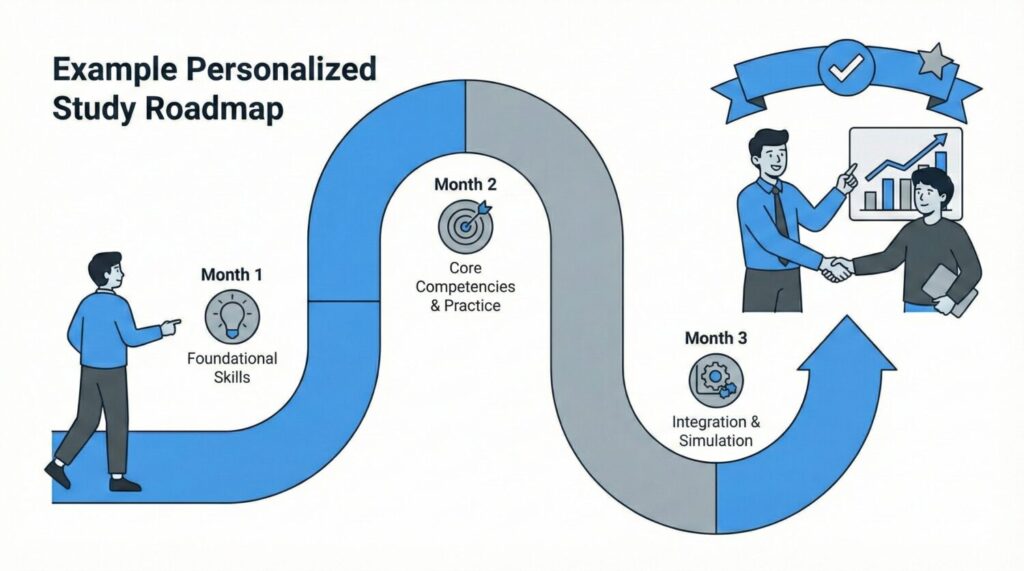
The roadmap breaks this overarching goal into monthly objectives that build progressively toward the final target. For a 3-month program, Month 1 typically focuses on assessment and foundational skills, Month 2 develops core competencies needed for the goal, and Month 3 refines and integrates everything into achieving the full performance objective.
For instance, consider an engineer who needs to participate more actively in technical meetings conducted in English. Their roadmap might structure the three months this way:
3-Month Performance Goal: Actively participate in technical meetings by clearly explaining ideas, asking for clarification when needed, and keeping up with fast discussions.
Month 1: Practice essential clarification phrases through role-play. Learn to summarize others’ points before responding. Build listening speed through technical meeting recordings. Complete a starting task that demonstrates current ability to explain a simple technical concept.
Month 2: Develop faster listening processing through rapid-response drills. Practice structured responses using connector words. Build confidence disagreeing politely in technical scenarios. Strengthen ability to handle unexpected questions.
Month 3: Conduct full meeting simulations with interruptions and follow-up questions. Practice explaining complex technical topics using clear structure (context → issue → proposal → risk). Complete an ending task that demonstrates growth from the starting task—now handling a more complex technical discussion with confidence.
Each month clearly identifies which skills to prioritize, which activities to practice during training sessions, and which self-study tasks support the monthly objective. This structure ensures every training hour directly contributes to achieving the learner’s specific communication goal.
See how we design roadmaps around your employees’ actual workplace needs.
Why Roadmaps Create Better Learning Outcomes
Personalized roadmaps address several problems that undermine effectiveness in generic language training programs. The most fundamental issue they solve is relevance. When training content directly connects to learners’ daily work challenges, engagement increases dramatically. Learners see immediate value in practice activities because they’re preparing for communication situations they’ll face this week or next month, not hypothetical scenarios about restaurant reservations or hotel check-ins.
This relevance creates stronger motivation. Generic programs often struggle with learner engagement because the connection between training content and workplace needs feels tenuous. When an employee spends training time learning vocabulary and phrases they’ll never use at work, the training feels like an obligation rather than an opportunity. Our roadmaps eliminate this problem by ensuring all activities support achieving a goal the learner actively wants to reach.
Roadmaps also provide clear progress measurement. In generic programs, progress tracking typically relies on proficiency tests that measure overall language ability. While these tests have value, they don’t answer the question that matters most to learners and their managers: Can the employee now handle the specific workplace communication that was previously challenging?
Because COMAS roadmaps focus on work-relevant performance goals, progress becomes visible in actual job performance. The engineer who struggled in technical meetings starts contributing ideas more confidently. The project manager’s emails to external partners become clearer and more professional. The sales professional handles client questions more smoothly. These observable improvements in workplace communication provide tangible evidence that training investment is delivering returns.
The roadmap structure itself enhances learning effectiveness. Breaking a large goal into smaller monthly objectives creates a sense of achievable progression. Rather than feeling overwhelmed by how much they need to improve, learners can focus on mastering specific skills each month, building confidence as they progress toward the larger goal. The starting task and ending task that bookend the training period make growth visible—learners can directly compare their performance on similar communication challenges at the beginning and end of the program.
Perhaps most importantly, roadmaps give learners agency in their learning process. During the first sessions, trainers review the proposed roadmap with learners and adjust based on their feedback. This collaborative approach ensures learners understand the plan and believe it will help them achieve their goals. When learners have bought into the roadmap, they take more ownership of their progress and engage more actively in training activities.
Adapting Roadmaps as Needs Change
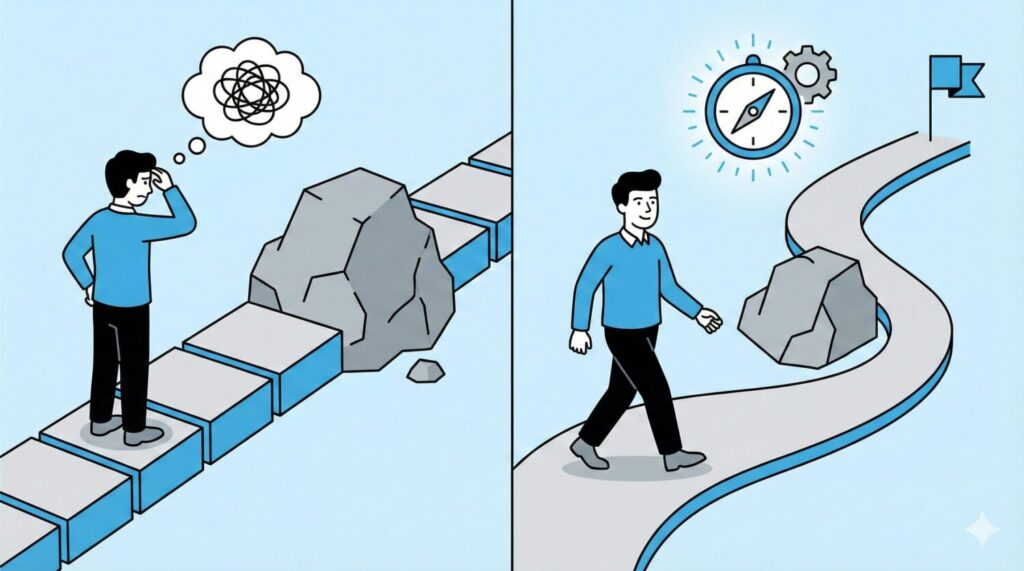
Workplace communication needs evolve. An employee’s role might shift midway through a training program. Organizational priorities might change. New communication challenges might emerge that weren’t visible during initial planning. Effective personalized training must adapt to these changes rather than rigidly following an outdated plan.
COMAS roadmaps remain flexible throughout the training period. Our trainers track progress during each session and conduct monthly reviews with learners to assess whether the current plan still serves their needs. If workplace circumstances change or learners discover new communication challenges that deserve focus, the roadmap adjusts accordingly.
This flexibility distinguishes our personalized training from curriculum-driven programs where the content is fixed regardless of how learner needs evolve. When a standard program reaches Unit 5 on the syllabus, learners study Unit 5 whether or not it addresses their current priorities. Our roadmap-driven training can pivot when needed, ensuring training time always focuses on the most important communication skills for the learner’s current situation.
Our trainers work with your employees to create and adjust roadmaps that deliver results.
Contact us to discuss your needs.
What This Means for L&D and HR Leaders
For organizations evaluating corporate language training options, the roadmap approach offers several advantages over generic curriculum-driven programs.
First, personalized roadmaps improve training efficiency. When every training hour directly addresses workplace communication needs, you avoid the waste inherent in generic programs where significant portions of content don’t match what employees actually need. This efficiency means employees develop job-relevant communication skills faster, reducing the time between training investment and workplace performance improvement.
Second, roadmaps create clearer accountability. Generic programs make it difficult to assess whether training is working because improvement is measured through proficiency tests that may not align with workplace communication requirements. Roadmap-driven training sets specific, observable goals from the beginning, making it clear what success looks like and whether the training is delivering expected results.
Third, personalized approaches increase employee engagement with training. When employees see direct connections between training activities and their job responsibilities, they’re more likely to participate actively and complete self-study assignments. This engagement drives better outcomes and higher ROI on training investment.
Finally, roadmaps support retention by demonstrating organizational investment in employee development. When companies provide training carefully tailored to individual employees’ professional growth, it signals genuine commitment to their success. This is particularly important for foreign employees at Japanese companies or Japanese employees at international organizations, where language barriers can create isolation and frustration that damage retention.
Moving Forward With Personalized Training
The fundamental question when evaluating corporate language training isn’t “What curriculum does this program offer?” It’s “How will this program help my employees communicate more effectively in the specific situations they face at work?”
Generic curriculum-driven programs struggle to answer this question because they’re designed for broad audiences, not specific individuals. COMAS roadmap-driven training answers it directly by creating personalized plans focused on each learner’s actual workplace communication needs and professional goals.
For organizations seeking language training that delivers measurable improvements in workplace communication, understanding how providers approach goal-setting and curriculum design should be the first evaluation criterion. Look for partners who invest significant effort in understanding learner needs before designing training plans. Partners who create clear, specific performance goals rather than generic proficiency objectives. Partners who involve learners in roadmap development to ensure buy-in and commitment.
The difference between generic training and personalized training often determines whether language programs improve workplace communication or just keep employees busy for a few months without meaningful impact.
Take Your Team’s Communication to the Next Level with COMAS Corporate Training
At COMAS, we provide practical, results-driven language training designed to address the kinds of challenges discussed in this article and support your organization in reaching its business goals.
Our programs are fully customizable to each employee’s skill level and job role, ensuring maximum learning impact and real workplace results.
We’d love to hear about your team’s current communication challenges — let’s discuss how we can help.
→ Learn more about our corporate language training programs here
→ Contact us to discuss your training needs